
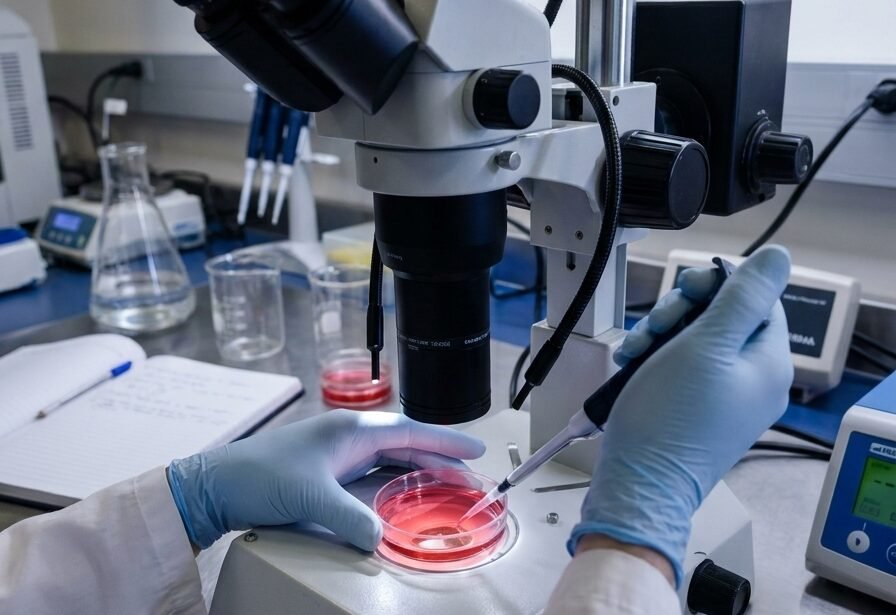
What Is Cancer-Related Fertility Preservation?
Cancer-related fertility preservation, also known as oncofertility, helps protect reproductive potential before cancer treatment begins. Treatments such as chemotherapy and radiation can affect fertility, so cryopreservation options such as freezing eggs, sperm, or embryos may be recommended before starting cancer therapy.
Why It Matters
Cancer treatments can affect ovarian function, sperm production, and hormone levels. Preserving fertility before treatment gives patients more options later in life for family planning and helps protect the possibility of having a biological child in the future.
Cryopreservation Options for Women
- Egg Freezing: Eggs are retrieved and frozen for future use. This process usually takes around 10–14 days.
- Embryo Freezing: Eggs are fertilized with partner or donor sperm, and the resulting embryos are frozen for future transfer.
- Ovarian Tissue Freezing: Ovarian tissue is surgically removed and frozen, especially in urgent cases where treatment cannot be delayed.
Cryopreservation Options for Men
- Sperm Freezing: A quick and non-invasive semen cryopreservation method used to preserve sperm before cancer treatment.
- Testicular Tissue Freezing: An experimental option that may be considered for prepubertal boys who cannot produce a semen sample.
When Should It Be Done?
Ideally, cryopreservation should be completed before cancer treatment begins. Some procedures, such as sperm freezing, can be completed quickly, while egg retrieval usually requires about two weeks.
Once proper fertility preservation is completed, gametes such as eggs and sperm can be stored safely for many years. Later, pregnancy can be planned using the patient’s own preserved eggs, sperm, or embryos.
Key Benefits
- Personalized treatment protocols specifically designed for your condition.
- State-of-the-art technology and advanced medical procedures.
- Experienced team of specialists dedicated to your success.