
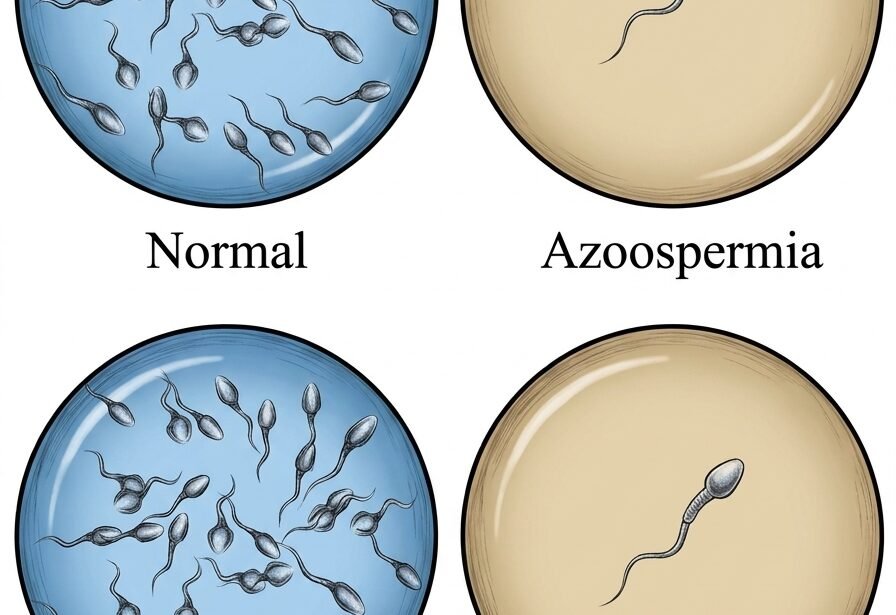
What is Azoospermia?
Azoospermia is a male infertility condition diagnosed when no spermatozoa are found in the semen. It is broadly classified into two types: obstructive azoospermia, where sperm is produced but blocked from reaching the semen, and non-obstructive azoospermia, where the testes have difficulty producing sperm.
Purpose of Evaluation and Treatment
The main goal of evaluation and treatment is to identify the underlying cause of azoospermia and determine the best strategy to help achieve biological parenthood. Depending on the condition, treatment may focus on restoring sperm flow or retrieving sperm directly from the reproductive tract or testicular tissue.
The Process
- Comprehensive Consultation: A detailed medical, reproductive, and surgical history is reviewed to understand possible causes.
- Hormonal Testing: Hormone levels are checked to assess testicular function and sperm production potential.
- Genetic Testing: Genetic evaluation may be recommended, especially in non-obstructive azoospermia cases.
- Lifestyle Management: Lifestyle corrections, nutritional support, and treatment of underlying health issues may be advised.
- Surgical Treatment: Microsurgical reconstruction may be considered in selected obstructive cases.
- Sperm Retrieval: Procedures such as MESA, TESE, or micro-TESE may be performed to retrieve sperm for use in ICSI.
Ideal Candidates & Success
Treatment may be suitable for men diagnosed with obstructive or non-obstructive azoospermia who wish to achieve biological parenthood. Sperm retrieval success rates are around 58–63%, while clinical pregnancy rates may range from 18–57%, depending on the type of azoospermia, sperm retrieval outcome, female partner’s age, and overall fertility condition.
Key Benefits
- Personalized treatment protocols specifically designed for your condition.
- State-of-the-art technology and advanced medical procedures.
- Experienced team of specialists dedicated to your success.